Boiler Bed Material
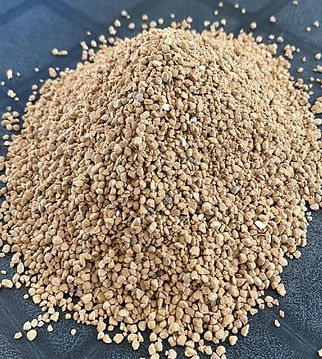
Boiler bed material is a critical component in the operation of fluidized bed combustion (FBC) boilers, which are used in power plants and industrial applications for efficient and environmentally friendly combustion of various fuels. The bed material serves as a medium for fluidization, providing efficient heat transfer, fuel combustion, and emission control.
Specifications
Boiler bed materials are available in sizes 0.85 to 2.30 mm with the density of 1050 to 1100 g/ltr
Physical and Chemical Properties
Physical Properties
-
Particle Size: 0.85-2.30 mm
-
Bulk Density: Approximately 1050-1100 g/ltr
-
Color: Typically light brown to reddish-brown, depending on the composition
-
Shape: Typically spherical or angular particles, providing good fluidization characteristics
-
Hardness: High hardness to withstand mechanical wear and abrasion
Chemical Composition
-
Silicon Dioxide (SiO2): 60-70%
-
Aluminum Oxide (Al2O3): 20-30%
-
Iron Oxide (Fe2O3): 2-5%
-
Calcium Oxide (CaO): 0.5-2%
-
Magnesium Oxide (MgO): 0.5-2%
-
Potassium Oxide (K2O): 1-2%
-
Sodium Oxide (Na2O): 0.1-1%
-
Titanium Dioxide (TiO2): 0.5-1%
Applications
-
Fluidized Bed Combustion (FBC) Boilers
-
Heat Transfer
-
Emission Control
-
Fuel Flexibility:
Conclusion
Boiler bed material is essential for the efficient and stable operation of fluidized bed combustion boilers. Its optimized physical and chemical properties ensure effective fluidization, heat transfer, and emission control. Proper handling and storage are crucial to maintaining its performance, and selecting high-quality bed material can significantly enhance boiler efficiency and longevity.